Overview
TalentSeeker is ZEIL’s AI-powered B2B platform for companies that need to source, shortlist, and engage relevant candidates faster. I designed the product end to end, transforming early ideas, problems, flows, and screens into a market-ready experience.
Problem Statement
The opportunity was to reduce recruiters' time-to-hire by creating a centralized platform to source, evaluate, and engage talent across 30+ networks and over 800 million candidate profiles. The platform needed to make high-volume talent discovery feel fast, organized, and immediately actionable for B2B hiring teams.
User Needs
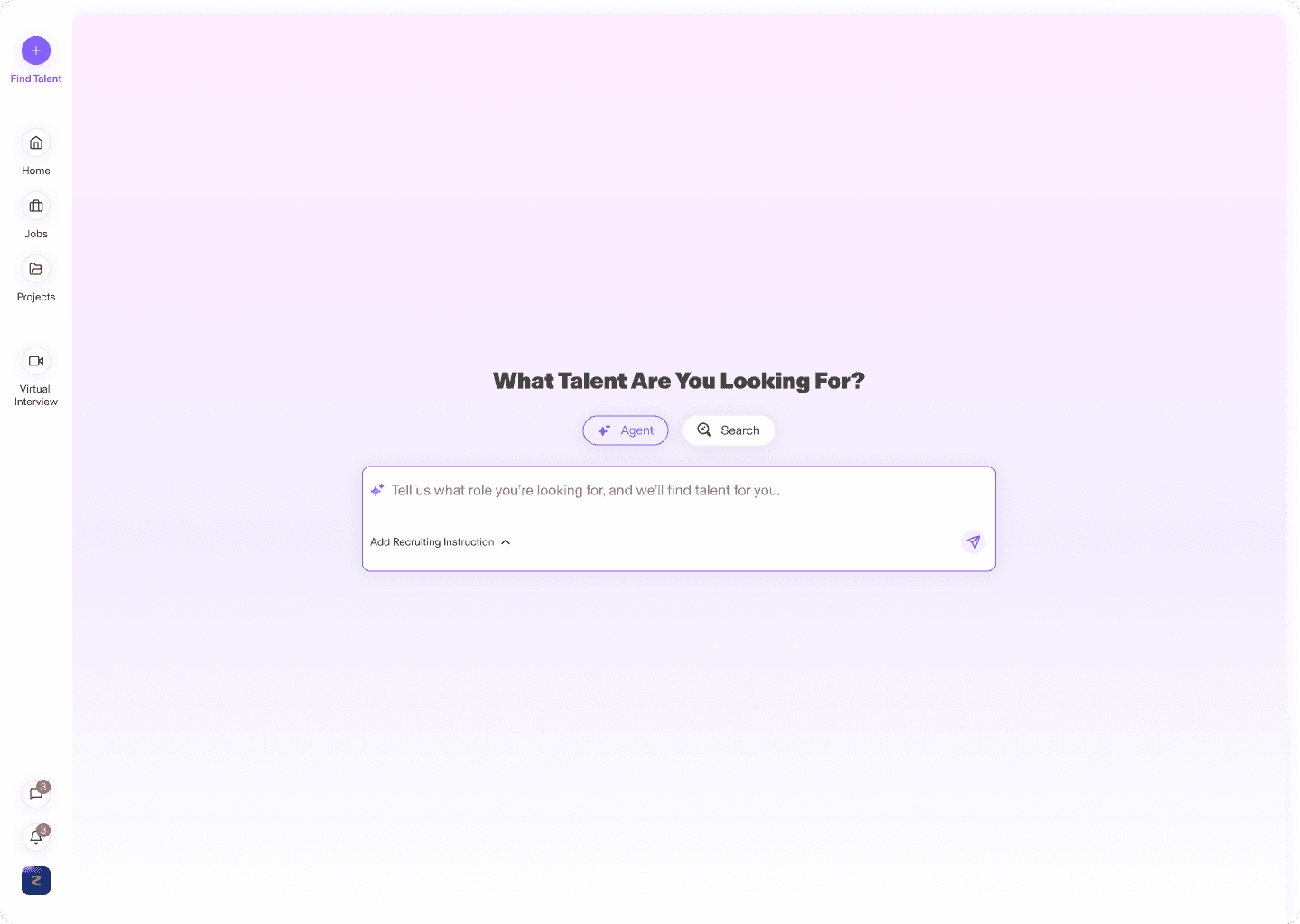
Agent Search
Recruiters just describe who they're looking for in plain language, and it gets turned into structured criteria: skills, experience, must-haves, shown as chips they can tweak. The big design problem was trust. Making the AI's reasoning visible instead of a black box, so recruiters don't just click go and hope.
Candidate Matches
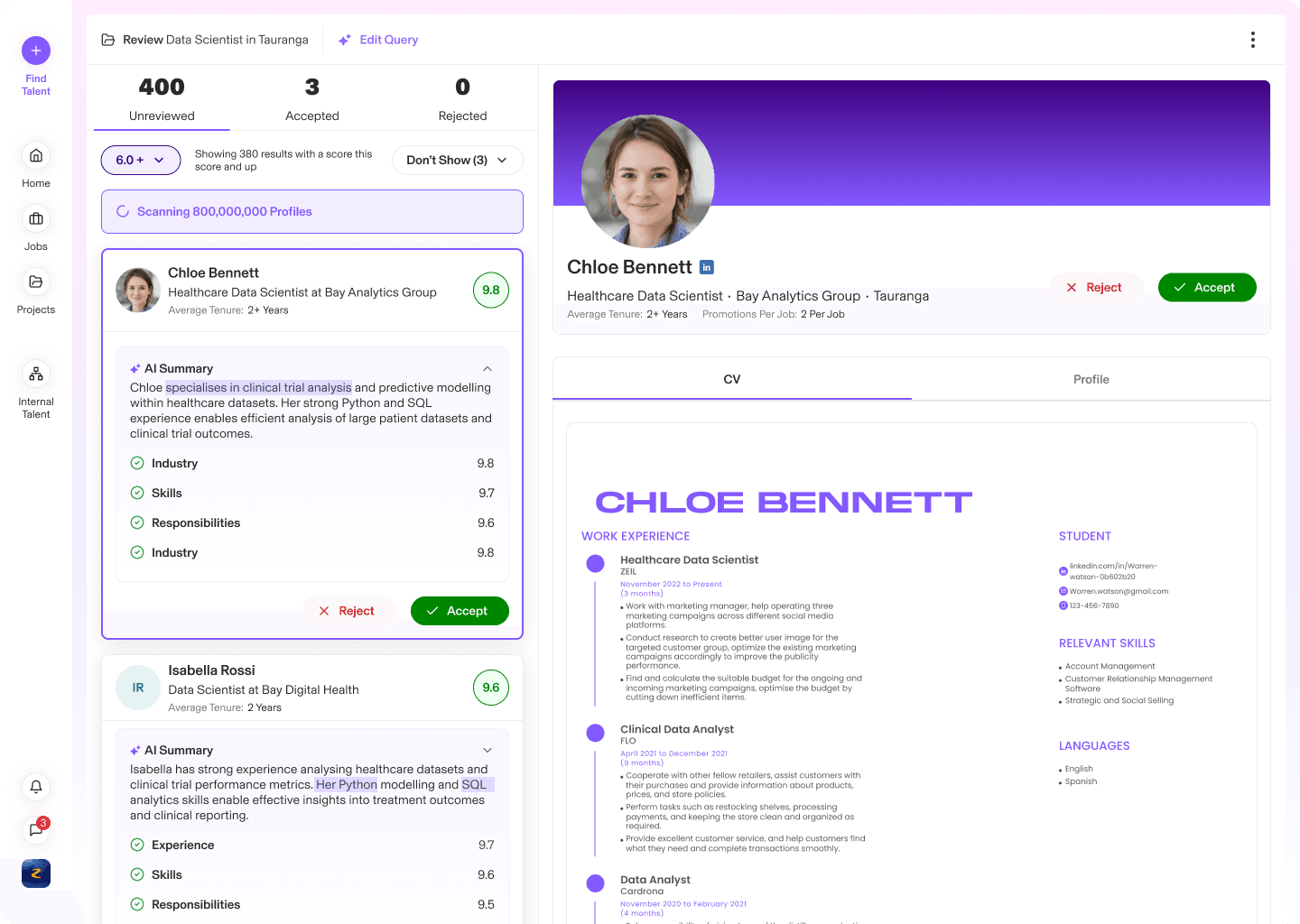
Instead of recruiters searching from scratch every time, the system proactively surfaces candidates it thinks fit the role. Each match comes with an AI summary explaining why, so recruiters aren't just trusting a score, they can see the reasoning. Recruiters then accept or reject each match, and that feedback loop is what makes the recommendations sharper over time instead of static.
Advanced Search
For recruiters who want more control than the AI search gives them, this lets them search directly against candidate profiles using specific keywords, boolean-style filters, and exact terms. It's the fallback for when a recruiter knows exactly what they're looking for (a certification, a tool, a job title) and doesn't want the AI interpreting it for them.

Candidate Management
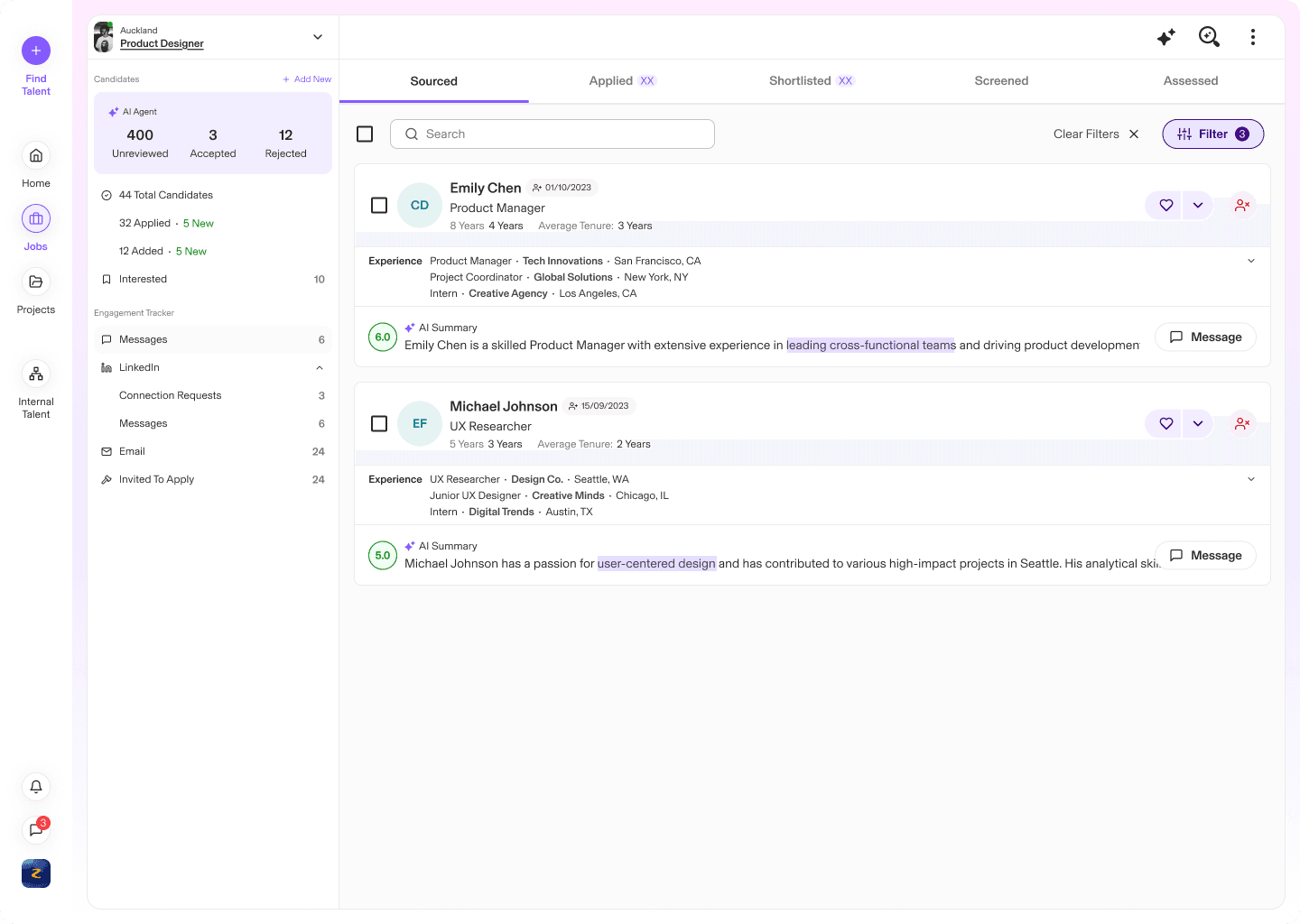
Once candidates are in the pipeline, this is where recruiters actually run the hiring process: tracking where each person sits by stage, moving them forward or rejecting them, and keeping the whole shortlist organized in one view instead of scattered across email and spreadsheets. It's the operational backbone that everything else (matches, notes, interviews) feeds into.
Related Projects